BEADART
• Handcrafted African Bead & Wire Art •
Page Content:
A small selection of our collection of African bead and wire art are hand-crafted by our team of talented African Creative artisans. Our Artisans have created 100's of custom made Logos and personal items. You tell us what you want, send a sketch or an image of something similar...nothing is too big or too small for our Beaders and the same goes for orders. Whether you need one custom beaded item or 1'000 our Artisans accept all orders.
♣
• Beadart • Wireart • Beaded Wireart • Beaded Christmas Decorations • Christmas Stars • Beaded Ornaments • Beaded HIV Aids Ribbons • Cancer Awareness Ribbons • Charity Ribbons • Beaded Lanyards • Beaded Keyrings • South African Beadwork • Traditional Bead Art • Corporate Beadwork Gifts • Custom Beaded Wire Art • Beaded Jewellery • Beaded Bracelets • Beaded Anklets • Beaded Earrings • Beaded Necklaces • Beaded Chokers • Custom Beaded Logos • Beaded Lighter Covers • Beaded Lanyards • Beaded Table Runners • Beaded Wall Hangings • Beaded Candle Holders • Beaded Tealight Holders • Beaded Candle Covers • African Beadwork • Zulu Beadart • Ndebele Style Beadwork • Handcrafted Wire Art • Beaded Wire Animals • Beaded Flowers • South African Souvenirs • Corporate Gifts • Beaded Corporate Gifts • Handmade Beaded Crafts South Africa • Beaded Proteas • Beaded Animals.
♣

Hi.........thank you for popping in!
Use the menu below to navigate the page
You will find eco friendly Products on EVERY listed page:

Keep your Carbon Footprints LOW - BUY
 Products


• Beaded Roses. Beaded Flower Center Piece. •
History and traditions of African Beadwork
African bead art is a vibrant and ancient art form that has been practiced for centuries
across the continent. Beads are used to create a wide variety of items, including
jewellery, clothing, masks, and sculptures. The types of beads used, the colours and
patterns chosen, and the techniques employed all vary depending
on the region and
culture.
•
Beadwork is an important part of many African cultures. It can serve a number of
purposes, including adornment, communication of status, and religious expression.
Beadwork can also be used to tell stories and preserve cultural history.
•
Beadwork is also an important art form in East Africa, where it is used to create a
variety of items, including jewellery, clothing, and household goods. The Maasai people
of Kenya and Tanzania are famous for their colourful beadwork, which often features
geometric patterns and symbolic designs.
•
Some of the most famous examples of
African beadwork come from West Africa, where beads have been used for centuries to
create elaborate jewellery and clothing. In Nigeria, for example, Yoruba beadwork is
known for its geometric patterns and use of bright colours. In Ghana, the Asante
people are known for their use of gold beads in their jewellery.
•
In Southern Africa, beadwork is used to create a variety of items, including jewellery,
clothing, and traditional attire. The Zulu and Ndebele people of South Africa are known
for their use of beadwork in their clothing, which often features geometric patterns
and symbolic designs.
•
Xhosa:The Xhosa people are the second-largest ethnic group in South Africa,
accounting for about 16% of the population. They are known for their click language
and their distinctive beadwork patterns.
•
Tswana:The Tswana people are a Bantu ethnic group native to southern Africa, whose
traditional homeland is what is now Botswana and South Africa. They are known for
their basket-weaving skills and their colourful clothing.
•
The Sotho people are a Bantu-speaking ethnic group native to southern Africa,
primarily in Lesotho and South Africa. Their beadwork is a distinct art form within the
broader tradition of African beadwork. •Sotho beadwork is known for its geometric
patterns and use of bold colours, particularly white, black, blue, red, and yellow.
Common motifs include chevrons, diamonds, zigzags, and triangles. These patterns
and colours are believed to have symbolic meanings, although their exact
interpretation can vary. For instance, white beads might symbolize purity, while black
beads could represent power.
•
Traditionally, Sotho beadwork was created by women and girls. The beads were sewn
onto a leather foundation using sinew or thread. Sotho beadwork was used to create a
variety of items, including:
•
Today, Sotho beadwork is still an important part of Sotho culture. It is worn for special
occasions, such as weddings and funerals, and is also a popular souvenir for tourists.
Sotho beadwork artists are also increasingly creating contemporary pieces that
incorporate traditional designs with modern elements.
•
Southern Ndebele
The Southern Ndebele people are primarily found in the provinces of
Mpumalanga, Gauteng and Limpopo in South Africa. They are famous for their brightly
coloured and intricategeometric beadwork and the equally vibrant murals that adorn
their homes.
•
Northern Ndebele The Northern Ndebele people live in Limpopo and
North West provinces of South Africa. Their cultural practices are more aligned with
their Sotho-Tswana neighbours compared to the
Southern Ndebele. Their beadwork
reflects this influence and uses a different colour palette and style than
the Southern Ndebele.
•
Jewellery: Beadwork was commonly used to make necklaces, bracelets, anklets,
and earrings. These items were often worn for adornment and to signify social status.
Clothing: Beadwork was used to decorate clothing, such as blankets, skirts, and hats.
•
Household items: Beadwork was also used to create functional items,
such as bags and headrests.
•
African bead art is a beautiful and complex art form that continues to be practiced
today. It is a testament to the creativity and skill of African artisans.
•
Chinese versus Czech seed Beads
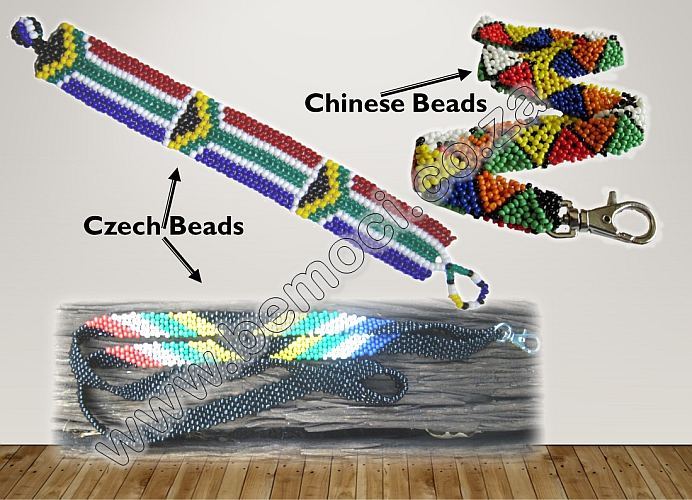
Chinese and Indian Seed Bead - The (cheap) seed beads from China
and India are less uniform than those from Japan or
Czechoslovakia. That uneven quality makes them incredibly
difficult to work with and often results in patterns being distorted.
 Due to the uneven pattern and sharp edges of the beads, the
weaving thread is prone to breaking.We do not accept
responsibility for irregular patterns nor breakages
for Chinese bead orders.
Czech Seed Bead Information
Czech seed beads are shaped like tiny donuts or bagels with nicelyrounded edges, and are more uniform sized. Czech beads are
beautiful in bead embroidery and in patterned loomwork such as
Lanyards.
We use only experienced beaders to work with Czechbeads, hence can guarantee excellent craftsmanship.
Beaded Wire Art often requires strong hands to shape an item:
This is usually done by men who work together with Bead Ladies
for the more intricate part of creating an item!
More Beaded Wire and Sheetmetal Art


• Traditional Beaded Flowers & Floral Arrangements •
Image 1 of 7

Beaded Flowers Beaded Yellow Rose


Beaded Flowers
Beaded Orange Rose

Beaded Flowers
Beaded Red Rose

Beaded Flowers
Beaded Proteas

Beaded Wire Aloe

Beaded Flower Bouquet
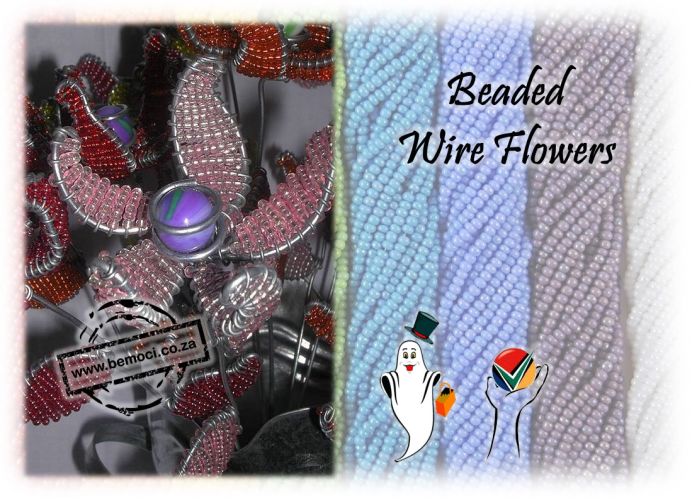
Beaded Wire Flowers


• Candle Holders •
• Beaded Tealight Candle Holders & Candle Covers•
Image 1 of 2
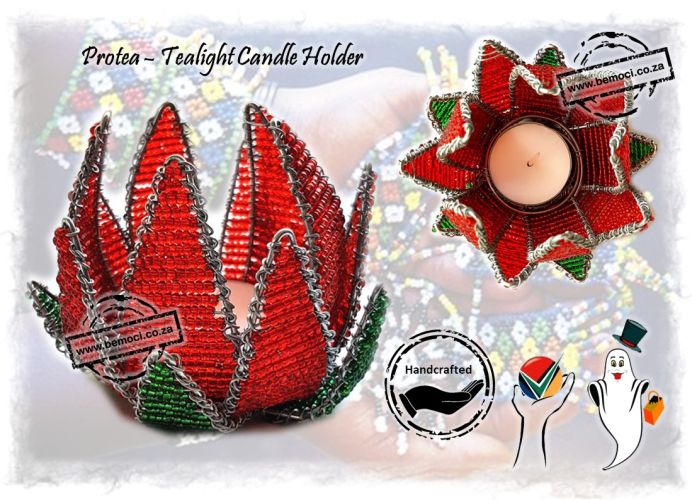
Beaded Protea Tealight Candle Holder
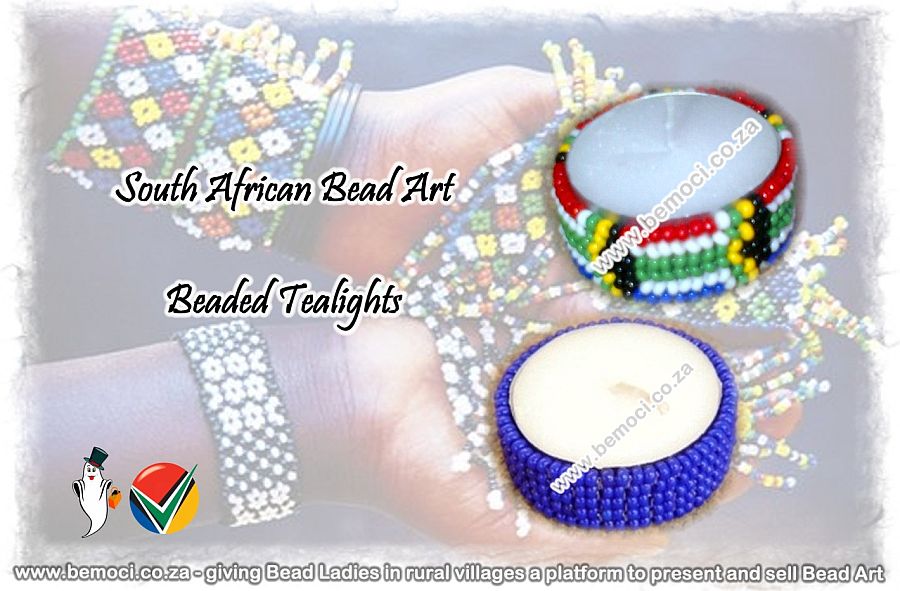
Beaded Tealight Candle Covers
Available as illustrated or made to your specifications
• Custom Logos •
• Lighter Covers • Lanyards •
• Table Runners • Wall Hangings•
Image 1 of 5
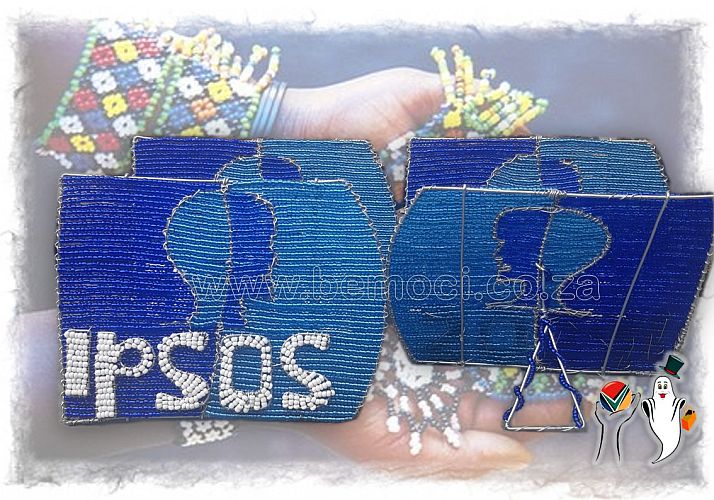
• Beaded Logos. •
While simple Logos can be
applied to many different items,
such as bracelets, keyrings, tags, etc;
intricate Logos are limited.
♦
Speak to us to discuss your requirements.

• Beaded Lighter Cover, SA South Africa Flag. •
Available as illustrated,
beaded Zulu and Ndebele Patterns or
customized and personalized
to your specifications.

• Beaded Lanyard, SA South Africa Flag. •
Available as illustrated,
beaded Zulu and Ndebele Patterns or
customized and personalized
to your specifications.
•
Lanyards measure approx.75cm (29.5") long
and the width is approx. 1,5-2cm.
Strung by hand, each Lanyard
is an original work of art and unique.
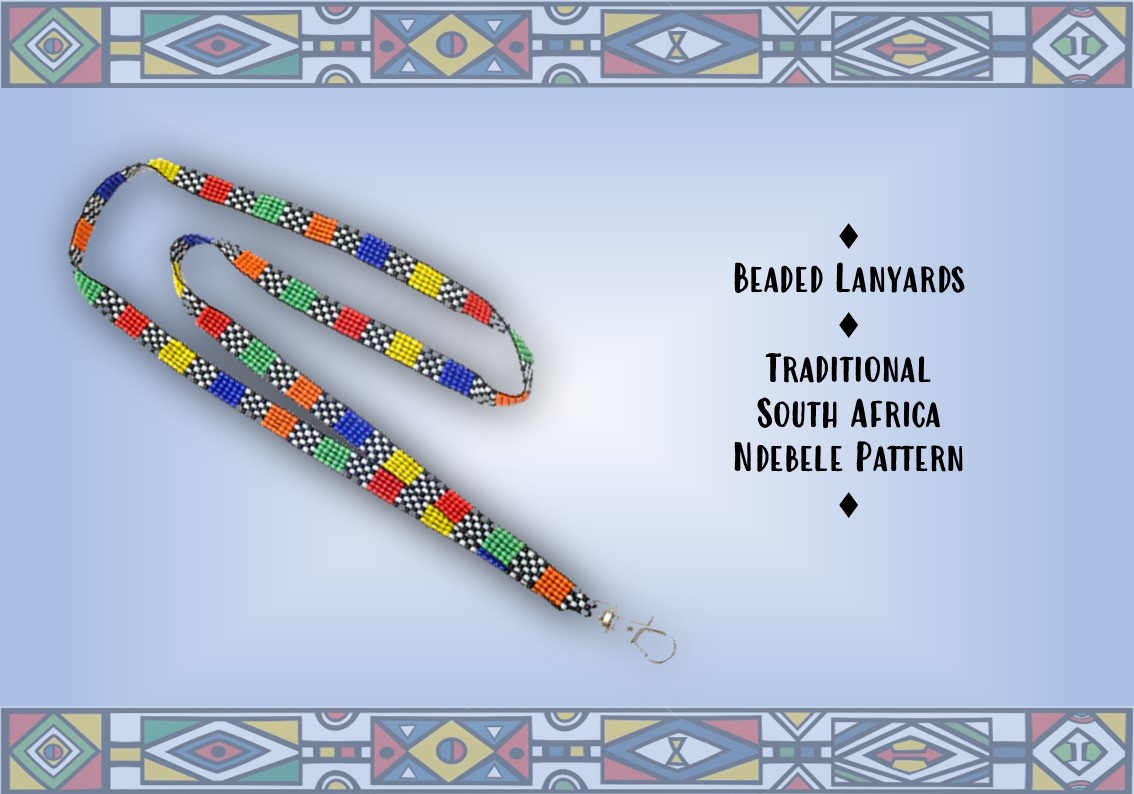
• Beaded Lanyards African Ndebele •
Available as illustrated,
beaded Zulu and Ndebele Patterns or
customized and personalized
to your specifications.

• Beaded Table Runners and Wall Hangings •
Available as illustrated Ndebele Beaded or
customized and personalized to your specifications.
• Beaded Jewellery •
• Bracelets • Anklets • Earrings •
•Necklaces • Chokers •
Image 1 of 7
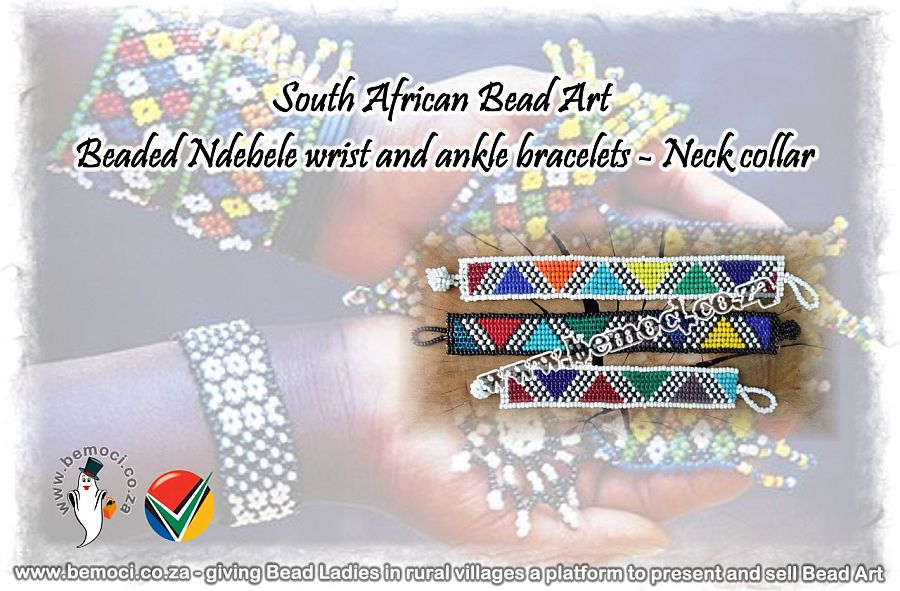
• Beaded Jewellery •
Bracelets • Anklets • Chokers • Neck-Bands •
Available as illustrated, African Ndebele Patterns,
Zulu Patterns or customized and personalized
to your specifications.
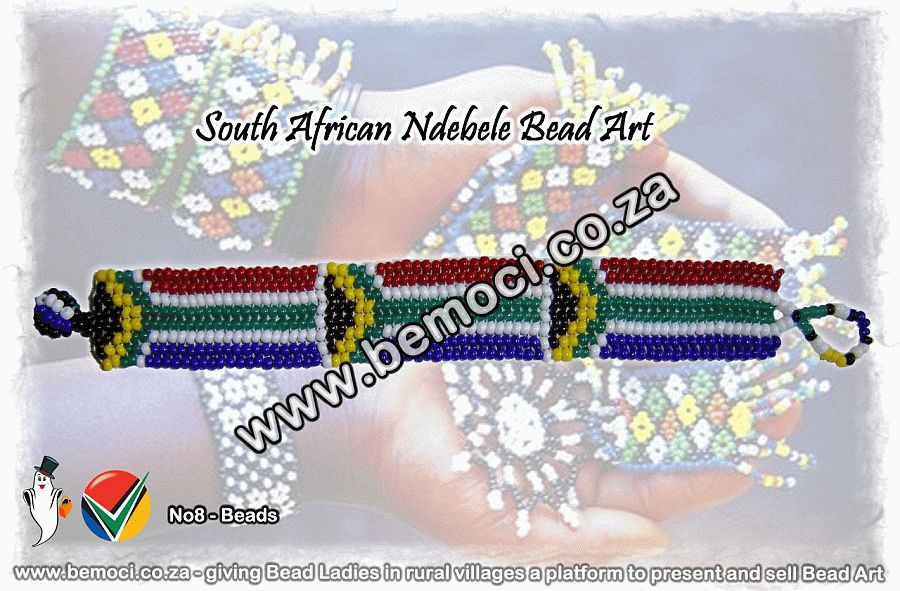
• Beaded Bracelets, SA South Africa Flag. •
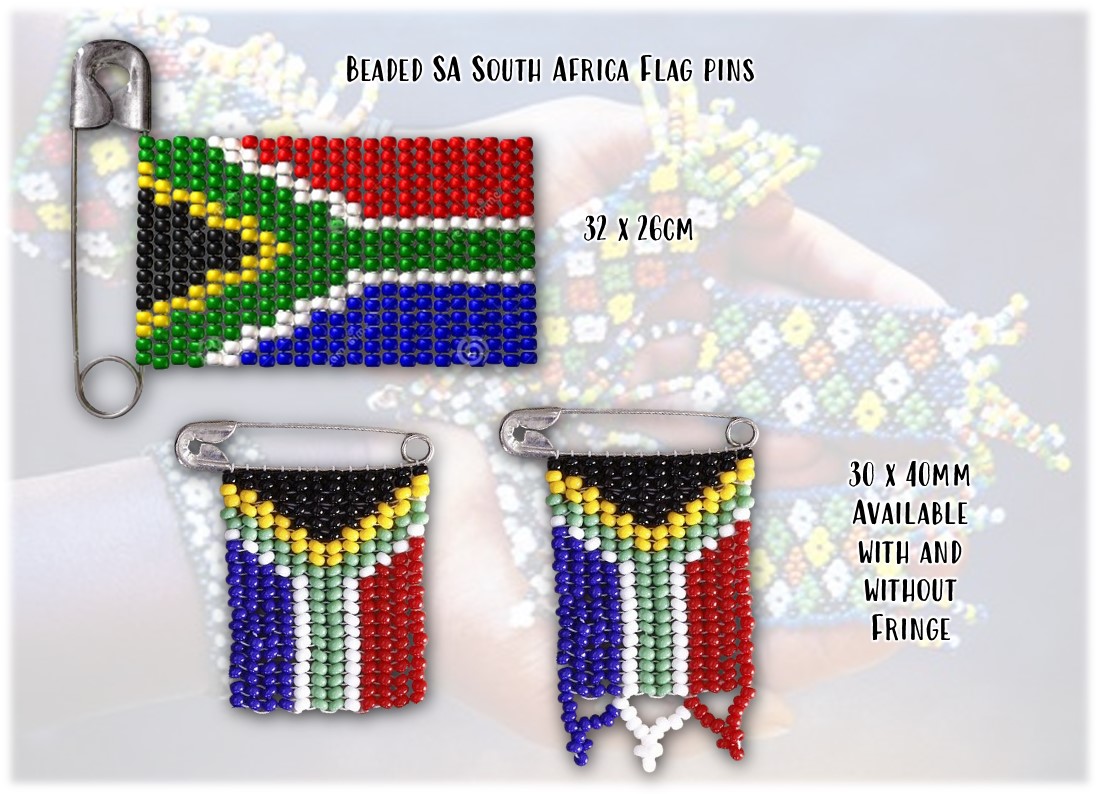
Beaded South Africa Flag
Lapel Pins and Flags

• Beaded Earrings, SA South Africa Flag •
Available as illustrated,
African Ndebele and Zulu Patterns,
or customized and personalized
to your specifications.

Beaded Necklaces
In colours and style of your choices
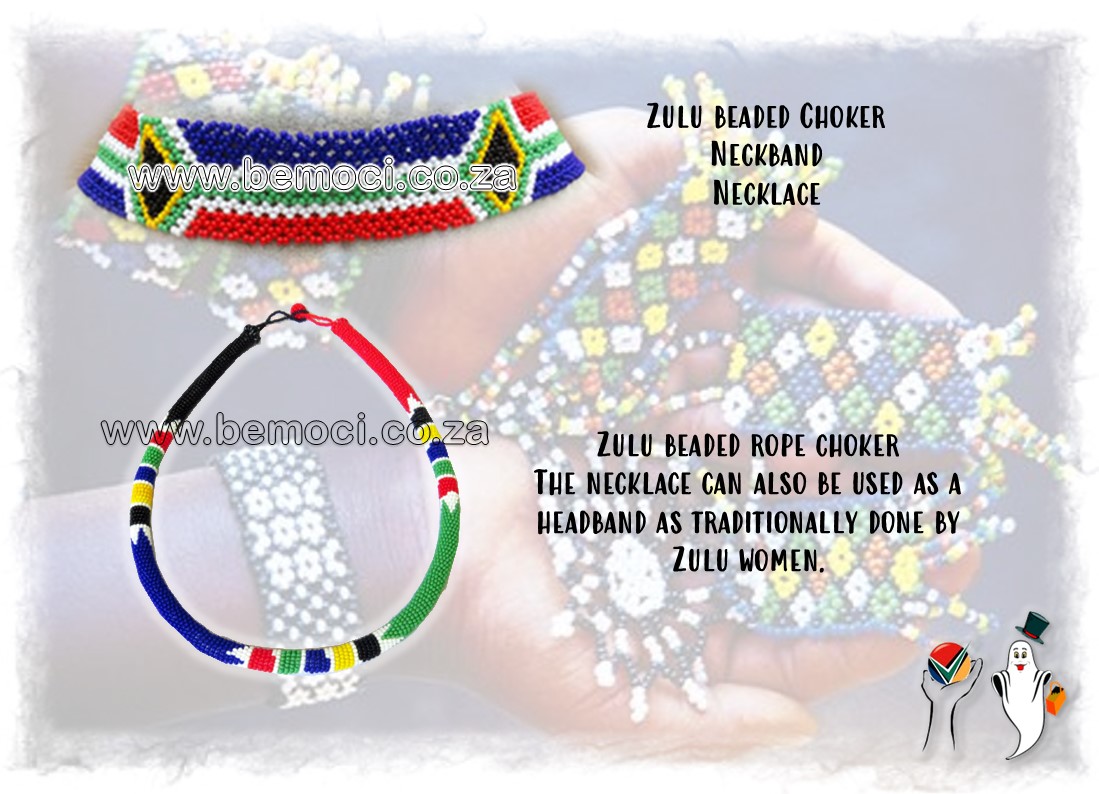
Beaded Chokers
Beaded Headbands
In colours and patterns of your choices
Beaded Necklaces
In colours and style of your choices

Beaded Bangles
with traditional Zulu or Ndebele patterns,
or customized in colours and patterns
of your choice.
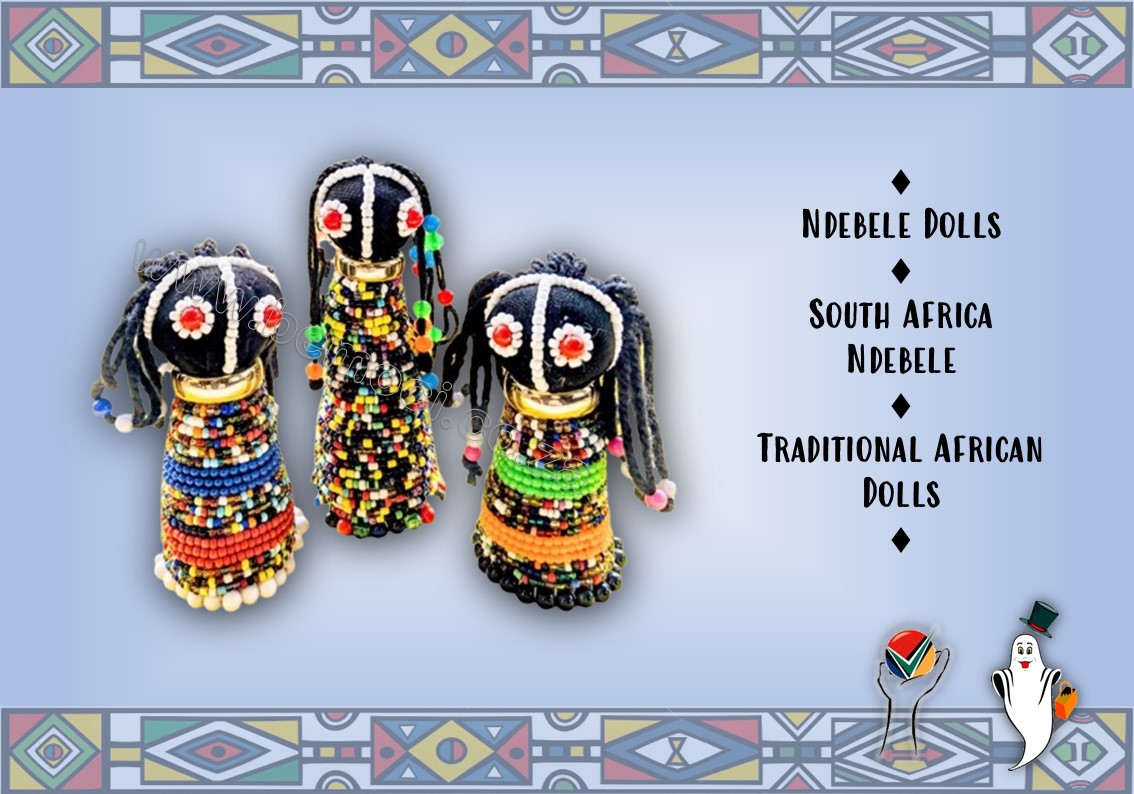
Beaded Ndebele Dolls
with traditional Zulu or Ndebele patterns,
or customized in colours and patterns
of your choice.
• Beaded AIDS Ribbons Pins Flags •
• Breast Cancer Ribbons Pins Flags •
•Cancer Awareness Ribbons all colours•
Image 1 of 2
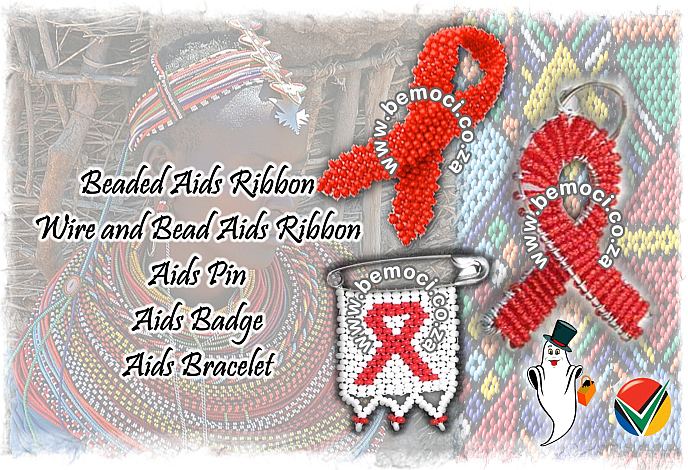
• Beaded Aids Ribbon • Beaded Aids Pins •
• Beaded Aids Badge • Beaded Aids Bracelets •
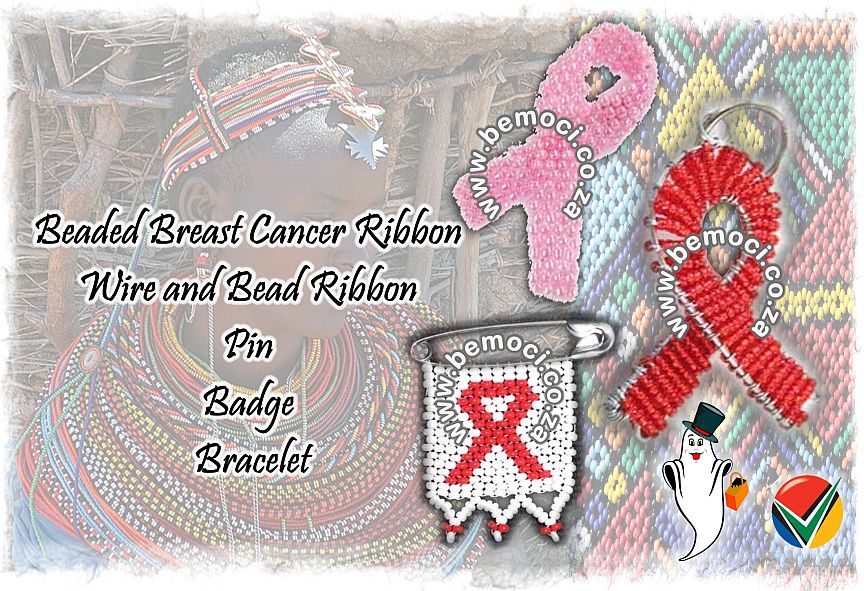
• Beaded Breast Cancer Ribbons •
• Beaded Breast Cancer Bracelets •
• Beaded Breast Cancer Pins •
• Beaded Flags of the World •
Image 1 of 1
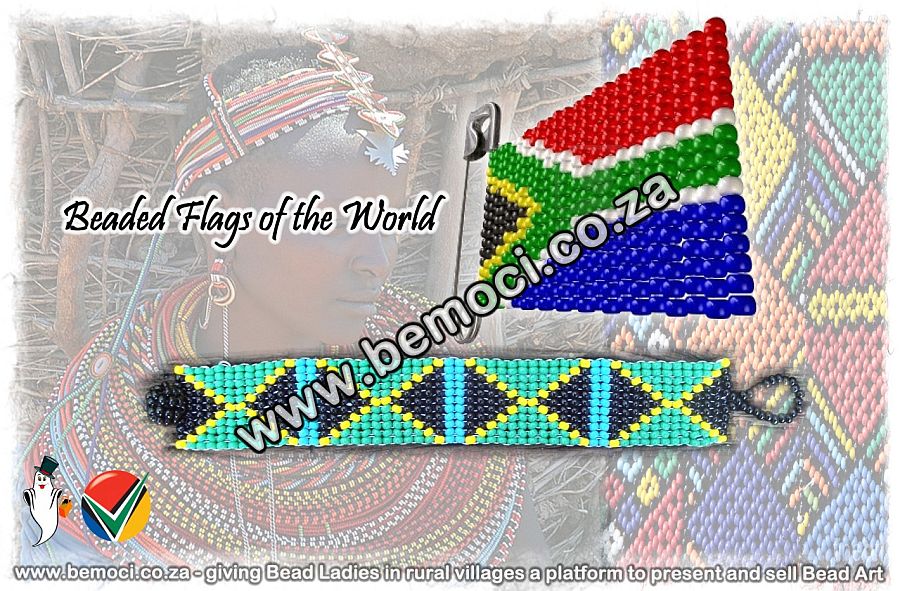
• Beaded Flags of the World •
Beaded Flags are representations of national flags
meticulously crafted using beads.
• Beaded Christmas Decorations •
Image 1 of 1
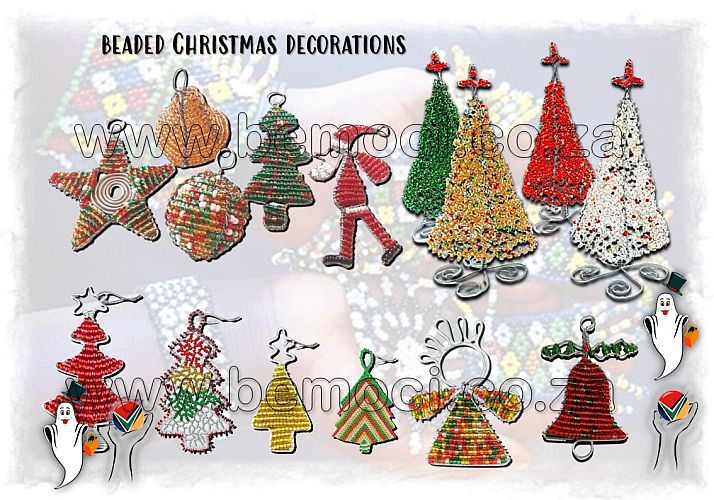
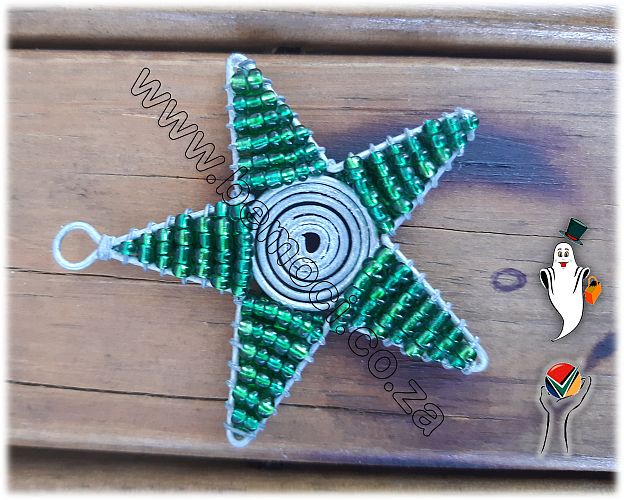
• Beaded Christmas Xmas Decorations •
Beaded Christmas decorations have a timeless appeal
and continue to be popular for their intricate
designs and the personal touch
they bring to Advent and Christmas Decoration
Illustrated are some tried, tested, and popular beaded
Advent and Christmas Decorations.
Many items designed for Christmas Tree Decoration,
can be used as Gift Tags, or Gift Decorations.
• Beaded Keyrings •
• Beaded Gift Tags •
• Beaded Bag Charms •
Image 1 of 10

Beaded Heart Keyring Gift Tag Charm
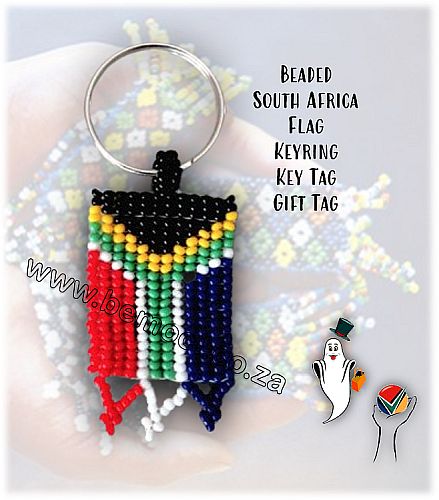
• An old time favourite Souvenir •
• Beaded South Africa Flag Keyring Gift Tag Bag Charm •
Customized Beaded Keyrings
Customized Beaded Gift Tags
♦
Speak to us to discuss your requirements
♦
Our Bead Wizards love making
something special for someone
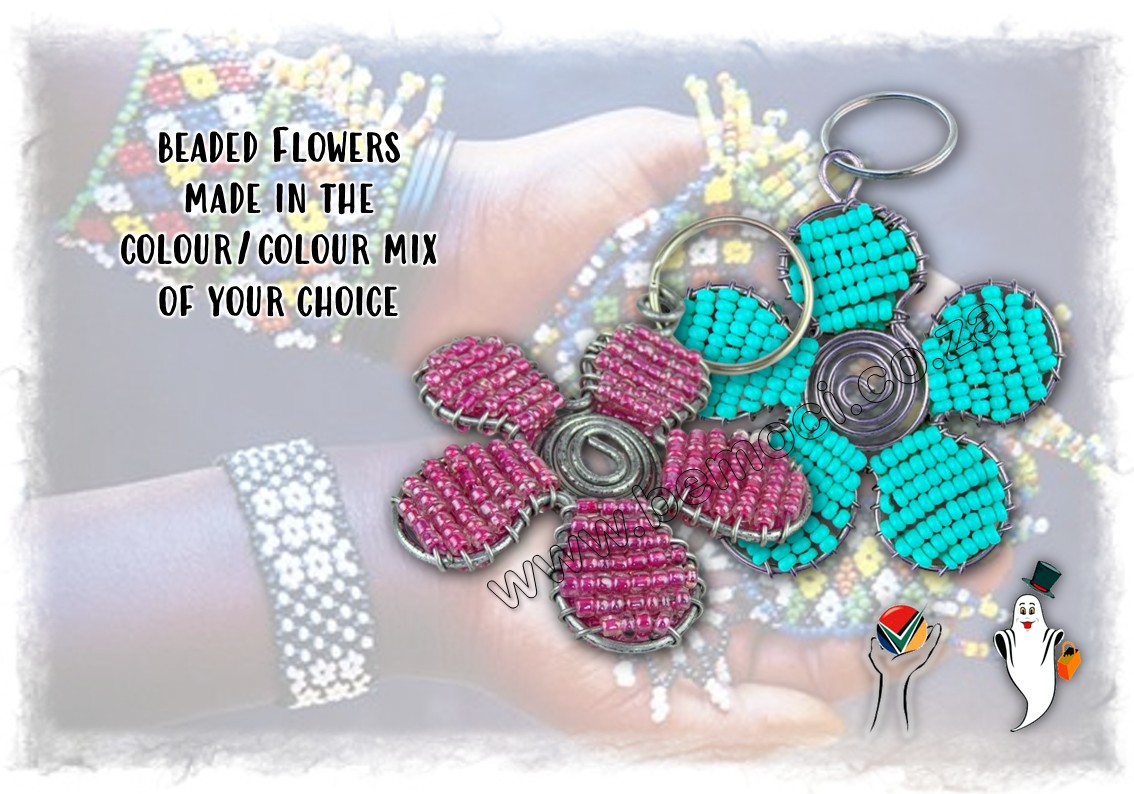
Beaded Flower Keyrings
Beaded Flower Gift Tags
Beaded Flower Charms
Made in the colour or colour mix
of your choice.
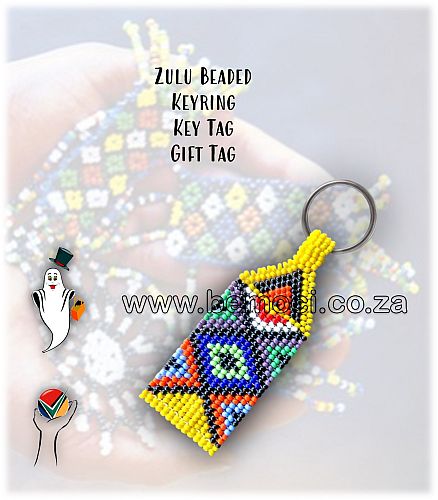
Beaded Keyrings
Zulu Beading Pattern
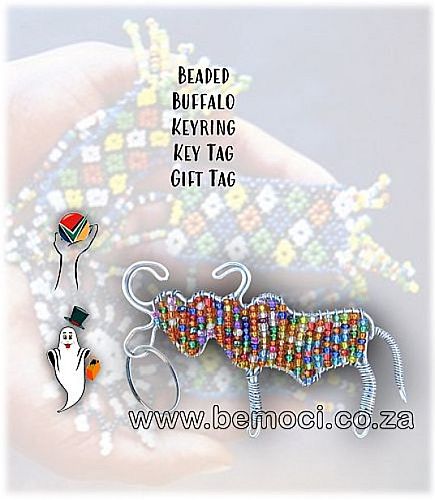
Beaded Keyrings Buffalo
Beaded Affrican Buffalo Keyrings

Beaded Keyrings Elephant
Beaded African Elephant Keyrings

Beaded Keyrings Leopard
Beaded African Leopard Keyrings
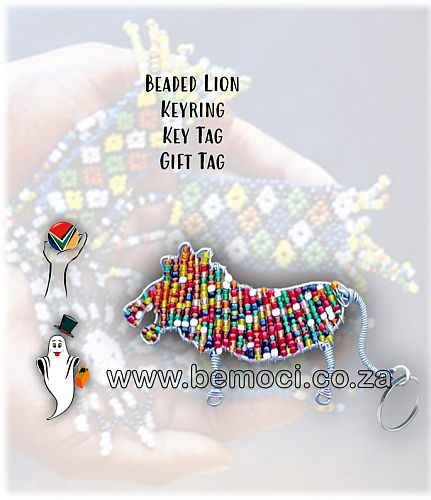
Beaded Keyrings Lion
Beaded African Lion Keyrings
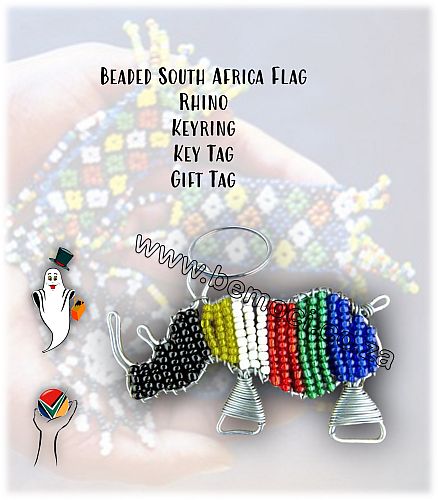
Beaded Keyrings Rhino
Beaded African Rhino Keyrings
• Ndeble Dolls •
• Cultural meaning & Traditions •
Image 1 of 1
Beaded Ndebele Dolls
Rites of Passage: Traditionally, these dolls play a role in marking significant Initiation: Courtship: Fertility: Status: Design and Craftsmanship: Materials: Symbolic Colors and Patterns: Contemporary Role: Collectibles: Cultural Meaning & Traditions
•
Beaded Ndebele dolls are more than just decorative items; they are rich in cultural significance
for the Ndebele people of Southern Africa, particularly South Africa and Zimbabwe.
Cultural Significance and Symbolism:
life stages for Ndebele women.
Young girls undergoing initiation into womanhood would traditionally receive these dolls.
They were meant to instruct them and were sometimes seen as charms to encourage fertility.
A suitor might place a doll outside a young woman's home to indicate his marriage proposal.
Marriage: When a woman was preparing for marriage, she would receive a doll that
she would name and care for.
It was a cherished object, and her first child was often named after it.
The dolls have also been associated with fertility, either given to young women to attract
a husband and increase their chances of having children.
The beadwork and adornments on the dolls often reflect the traditional clothing
and beadwork worn by Ndebele women during different ceremonies and stages of life,
indicating the wearer's age and status.
Intricate Beadwork: Ndebele people are renowned for their vibrant and detailed beadwork,
and this artistry is evident in the dolls. The beadwork often features geometric patterns
and bold colors, mirroring the designs found in their traditional clothing and painted homes.
The dolls are typically constructed with a cloth or fabric base, which is then covered
in meticulously stitched glass or plastic beads.
They may be stuffed to give them shape and often feature beaded neck rings,
bracelets, and other adornments.
The colors and patterns used in the beadwork are not merely decorative.
They often carry specific meanings related to Ndebele history, beliefs,
social structures, and the individual's life stage or status.
Cultural Identity: In addition to their traditional significance, beaded Ndebele dolls
continue to be an important expression of Ndebele cultural identity.
The dolls are now popular among tourists and collectors worldwide,
who appreciate their artistry and cultural heritage.
It's important to buy these dolls from ethical sources that ensure
fair compensation to the artisans.
In essence, beaded Ndebele dolls are beautiful representations of Ndebele culture,
tradition, and the skilled artistry of Ndebele women, carrying layers of
meaning and history within their intricate beadwork.
• Bead Artists •
• Cultural meaning & Traditions •

Bead Artist
Details
Margaret loves the challenge of creating commissioned
Bead Art such as
Custom Invitations - Banners - Logos - Gifts.
Margaret has an "Army" of Ladies she trained and
supervises who often
leave their rural homes
and stay with her to complete an order.
All Beadwork is done by talented and skilled
rural Ladies and Wire Artists.
Every order contributes to support Families
and is greatly appreciated by our Artists.
Looking for more products?

Content of this page belongs to BEMOCI
 est 2006
Page Content:
A small selection of our collection of African bead and wire art are hand-crafted by our team of talented African Creative artisans. Our Artisans have created 100's of custom made Logos and personal items. You tell us what you want, send a sketch or an image of something similar...nothing is too big or too small for our Beaders and the same goes for orders. Whether you need one custom beaded item or 1'000 our Artisans accept all orders.
♣
• Beadart • Wireart • Beaded Wireart • Beaded Christmas Decorations • Christmas Stars • Beaded Ornaments • Beaded HIV Aids Ribbons • Cancer Awareness Ribbons • Charity Ribbons • Beaded Lanyards • Beaded Keyrings • South African Beadwork • Traditional Bead Art • Corporate Beadwork Gifts • Custom Beaded Wire Art • Beaded Jewellery • Beaded Bracelets • Beaded Anklets • Beaded Earrings • Beaded Necklaces • Beaded Chokers • Custom Beaded Logos • Beaded Lighter Covers • Beaded Lanyards • Beaded Table Runners • Beaded Wall Hangings • Beaded Candle Holders • Beaded Tealight Holders • Beaded Candle Covers • African Beadwork • Zulu Beadart • Ndebele Style Beadwork • Handcrafted Wire Art • Beaded Wire Animals • Beaded Flowers • South African Souvenirs • Corporate Gifts • Beaded Corporate Gifts • Handmade Beaded Crafts South Africa • Beaded Proteas • Beaded Animals.
♣